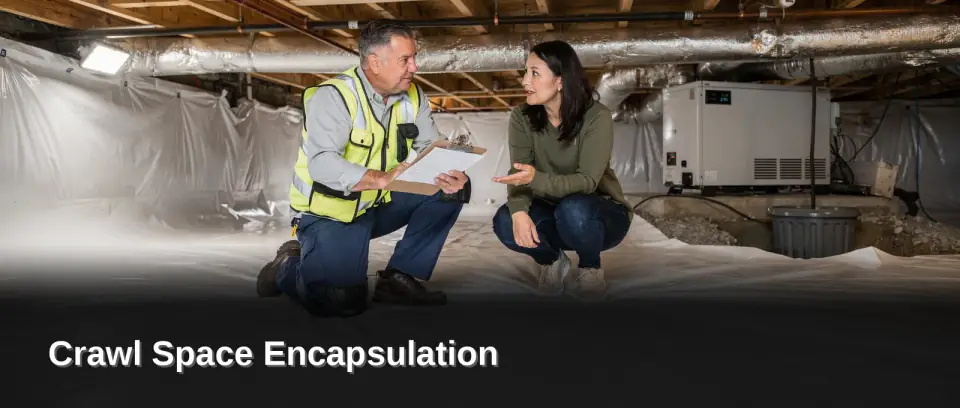
Crawl space encapsulation costs Iowa homeowners $5,000 to $15,000 for most residential projects, with the national average between $5,500 and $8,250. The investment seals moisture out from under the floor, stopping musty air, wood rot, and pests while increasing property value and reducing energy costs. Dry Duck Basement Waterproofing provides crawl space encapsulation with free inspections and clear written estimates.
Key Takeaways
- Crawl space encapsulation costs Iowa homeowners $5,000 to $15,000 for most residential projects.
- Iowa’s heavy rains and clay-rich soil push encapsulation costs toward the higher end of the price range.
- Encapsulated crawl spaces increase Iowa home values by an average of 10%.
- Homeowners save up to 20% on energy costs after sealing the crawl space.
What does crawl space encapsulation cost in Iowa?
Full crawl space encapsulation costs $5,000 to $15,000 for most residential projects. The national average sits between $5,500 and $8,250 for a standard-sized crawlspace of 800 to 1,500 square feet, according to the Crawlspace Encapsulation Cost and ROI Data report. That price includes a vapor barrier, sealed vents, insulation, and a dehumidifier. Iowa homeowners face additional cost pressure from the state’s heavy rains and clay-rich soil, which accelerate moisture intrusion and can push a project toward the higher end of the range.
What factors drive the final crawl space encapsulation cost?
The cost per square foot spans $2 to $10 depending on the scope of work and materials specified. A basic vapor barrier installation with vent sealing falls at the low end. Homes with clean, accessible crawlspaces and minimal prep work land in that lower tier. Properties requiring structural repairs, difficult access, or larger footprints climb toward the upper limit. A Des Moines crawl space vapor barrier alone costs less than a full system, but skipping encapsulation leaves the home vulnerable to ongoing crawl space moisture Iowa problems that eventually demand foundation repair.
How do Iowa homeowners get an accurate price?
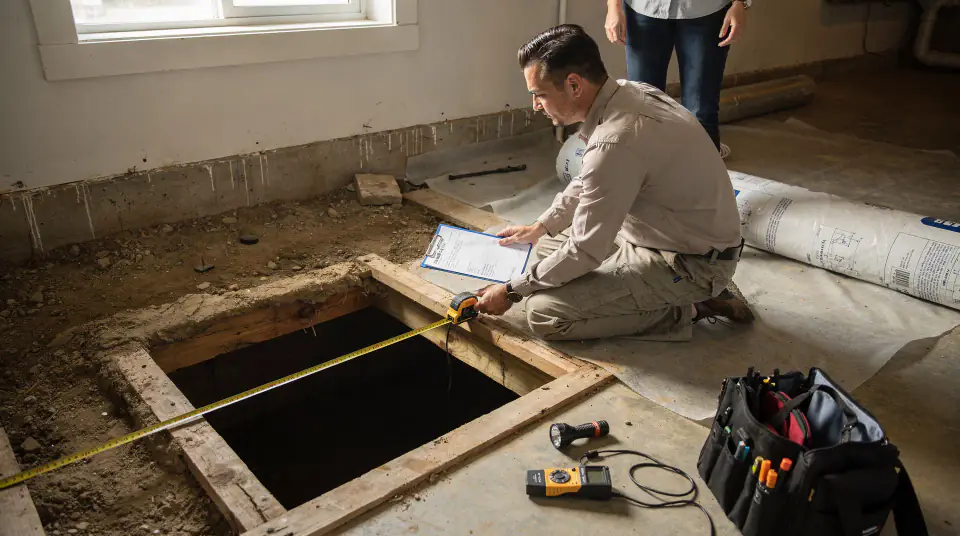
Dry Duck Basement Waterproofing provides free inspections and written estimates with clear pricing. A technician assesses the crawlspace condition, measures square footage, and identifies any prep work or repairs needed before encapsulation begins. The written estimate breaks down every line item so homeowners see exactly what drives the total. No hidden fees. No pressure. Just a straightforward plan built for the specific property.
How does encapsulation stop crawl space moisture in Iowa?
Crawl space encapsulation stops moisture by sealing the entire area beneath a home with a durable vapor barrier. This blocks the constant moisture pressure that Iowa’s heavy rains, snowmelt, and clay-rich soil create against foundations.
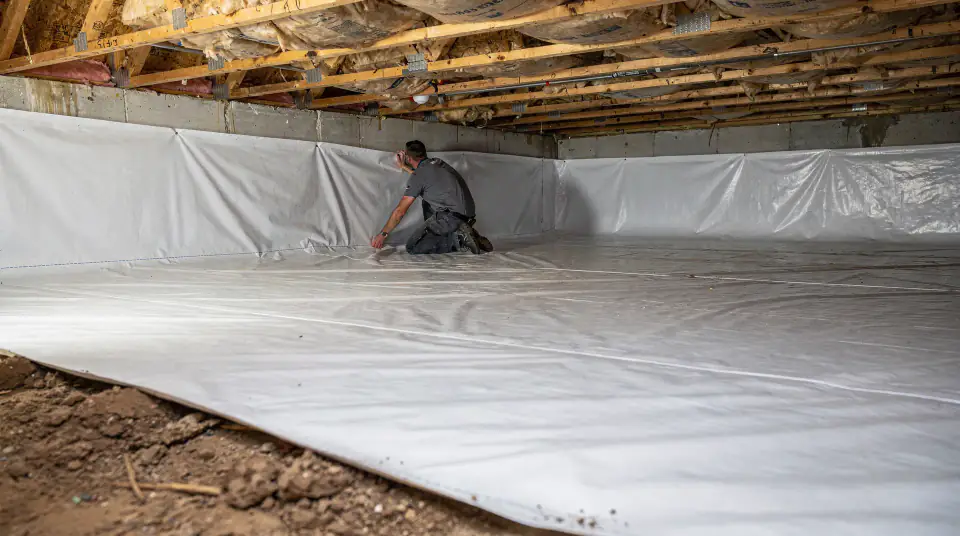
The process transforms a damp, open crawl space into a controlled, dry environment. A polyethylene vapor barrier covers the floors and walls, creating a continuous seal. This physical barrier prevents ground moisture from evaporating upward into the structure.
What does a vapor barrier actually block?
A Des Moines crawl space vapor barrier stops three destructive forces at once. It seals moisture out from under the floor. Musty air loses its path into living spaces. Wood rot and pests also lose their easy entry point.
Without this seal, crawl space moisture in Iowa causes ongoing damage. Warm, humid air rises from the soil and condenses on cooler floor joists and subflooring. Over time, this condensation feeds mold growth and weakens structural wood members.
How does encapsulation protect the foundation long-term?
The vapor barrier interrupts the moisture cycle that threatens foundation repair needs. By keeping the ground sealed, humidity levels in the crawl space drop significantly. Floor joists stay dry. Insulation performs as designed rather than sagging with absorbed water.
Dry Duck Basement Waterproofing installs these systems to stop the upward migration of soil gases and water vapor. Homeowners who improve air quality with crawl space encapsulation also reduce the stack effect that pulls crawl space air into every room above. The result is a drier foundation and cleaner indoor air throughout the home.
Does crawl space encapsulation add value to an Iowa home?
Encapsulated crawl spaces increase Iowa home values by an average of 10%. That figure comes from FastExpert’s February 2024 analysis of real estate data. The return extends beyond resale price, though. Homeowners gain measurable savings while still living in the house.
How much can Iowa homeowners save on energy costs?
Sealed crawl spaces stabilize indoor temperatures. That stability eases the burden on heating and cooling systems. Homeowners save up to 20% on energy costs, according to FastExpert. For Iowa winters and humid summers, those savings compound month after month.
What makes crawl space encapsulation a strategic investment?
Crawl space encapsulation is a strategic investment with long-term benefits. Polyguard describes the value as extending beyond financial return alone. The investment protects structural integrity and reduces energy costs simultaneously. Iowa homeowners looking to increase property value find the strongest case in combining those outcomes.
| Benefit | Impact on Iowa Homes |
|---|---|
| Home value increase | Average of 10% |
| Energy cost savings | Up to 20% |
| Temperature stability | Reduced heating and cooling burden |
Crawl space moisture Iowa problems undermine both comfort and resale potential. A Des Moines crawl space vapor barrier addresses the root cause before damage spreads. Foundation repair costs climb when moisture goes unmanaged. Encapsulation prevents that escalation. The 10% value gain matters less than avoiding structural deterioration that erases equity entirely.
What are the main benefits and drawbacks of encapsulation?
Crawl space encapsulation delivers measurable protection for Iowa homes, but homeowners should weigh the trade-offs before committing. The crawl space directly affects indoor air quality, floor stability, household odors, and monthly energy costs. MoistureLoc’s analysis of crawl space encapsulation notes that this below-home area influences the air a family breathes and the sturdiness of floors above it.
What does encapsulation actually improve?
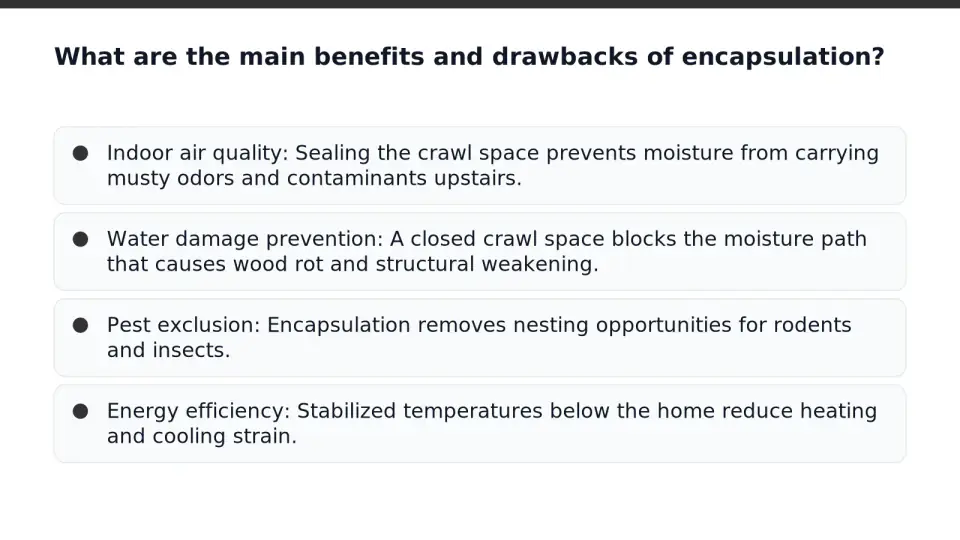
The benefits center on four areas:
- Indoor air quality: Sealing the crawl space prevents moisture from carrying musty odors and contaminants upstairs.
- Water damage prevention: A closed crawl space blocks the moisture path that causes wood rot and structural weakening.
- Pest exclusion: Encapsulation removes nesting opportunities for rodents and insects.
- Energy efficiency: Stabilized temperatures below the home reduce heating and cooling strain.
FastExpert’s February 2024 report confirms that closed-off crawl spaces increase property values by improving energy efficiency, indoor air quality, and water damage resistance. The same report notes encapsulation keeps pests out because they lose nesting space.
What are the drawbacks homeowners should expect?
The primary drawback is upfront cost. Full encapsulation involves materials, labor, and often a dehumidifier. Some Iowa homes need prep work first, such as removing standing water or repairing joists. That adds expense before the vapor barrier goes in.
Another consideration is access. Tight or low-clearance crawl spaces complicate installation and extend project timelines. Homeowners who skip professional installation risk gaps in the barrier that let crawl space moisture Iowa conditions reintroduce humidity.
Dry Duck Basement Waterproofing addresses these concerns through licensed and insured technicians who install systems with warranty protection. The company’s process includes inspection, written estimates, and disciplined installation practices. For Iowa homeowners weighing encapsulation against ongoing moisture damage, the long-term protection typically outweighs the initial investment.
How does encapsulation relate to foundation repair in Iowa?
Crawl space encapsulation and foundation repair address the same underlying threat: uncontrolled moisture. Iowa’s clay-rich soil expands when wet and contracts when dry, creating constant pressure shifts against foundation walls. A sealed crawl space stops water vapor from entering the home’s lowest level, which reduces the conditions that accelerate foundation deterioration.
Dry Duck Basement Waterproofing provides full-scope basement and foundation solutions, including foundation waterproofing and vapor barrier installation. The company serves Des Moines and surrounding communities within roughly 60 miles. Licensed and insured, the team has been serving the region since March 2020 and remains available 24/7.
Why do Iowa homes need both services together?
Moisture weakens concrete over time. Cracks form. Water finds those cracks. Encapsulation alone cannot fix structural damage already present. Foundation repair alone cannot stop ongoing moisture intrusion. The two systems work as one protective layer.
Foundation repair and basement waterproofing in Iowa require free inspections, transparent pricing, and lifetime warranties. Homeowners comparing providers can review the top foundation repair companies in Des Moines to understand service differences and warranty terms.
What happens when crawl space moisture goes unaddressed?
Wood rot spreads through floor joists. Mold releases spores into living spaces. Floors sag. The foundation bears additional stress from shifting soil and trapped humidity. Dry Duck Basement Waterproofing addresses these risks through disciplined installation practices and comprehensive warranties. Fixes last without surprises or hidden fees.
FAQ
What does crawl space encapsulation cost in Iowa?
Full crawl space encapsulation costs $5,000 to $15,000 for most residential projects, with Iowa’s heavy rains and clay-rich soil pushing costs toward the higher end.
Conclusion
For Iowa homeowners, the decision comes down to protecting the home’s structure and the family’s comfort against the region’s relentless moisture. Encapsulation stops the conditions that lead to wood rot, mold, and foundation strain. The energy savings and property value gain reinforce the investment. Homeowners who schedule a free inspection and written estimate take the first step toward a sealed, stable crawl space that pays off through years of avoided repairs and healthier indoor air.