
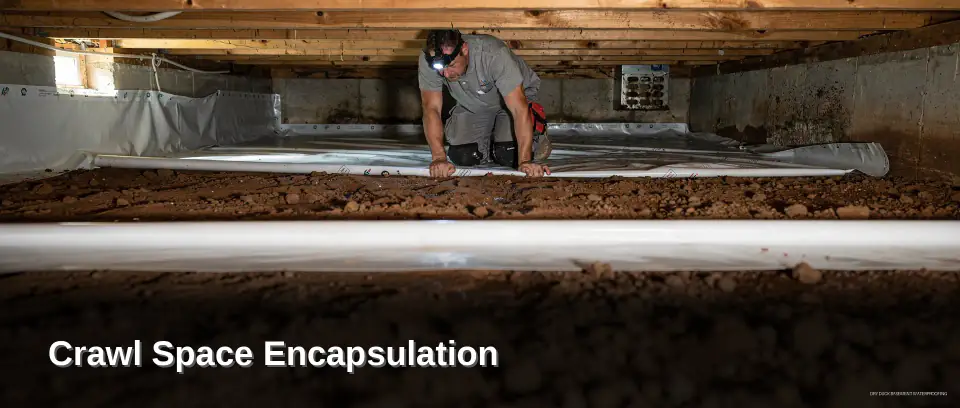
Central Iowa crawl space moisture problems stem from the region’s clay-rich glacial soils and extreme seasonal humidity swings. These conditions trap water under homes, causing wood rot, mold growth, and musty indoor air. Dry Duck Basement Waterproofing provides professional crawl space encapsulation that seals moisture out from under the floor, eliminating the easy path for pests and structural decay.
Key Takeaways
- Central Iowa’s clay-rich glacial soils trap water under homes, causing wood rot and mold growth.
- Freeze-thaw cycles in Central Iowa winters progressively widen foundation cracks, allowing more moisture entry.
- Relative humidity above 60 percent inside a crawl space activates mold spores and accelerates wood rot.
- The stack effect pulls damp, contaminated crawl space air upward into living areas year-round.
Why is crawl space moisture a problem in Central Iowa?
Central Iowa’s climate and soil create relentless moisture pressure on crawl spaces. Homes across the region face a combination of cold-humid air, clay-heavy ground, and dramatic seasonal shifts that trap water beneath floor joists year-round.
How does Iowa’s climate classification affect crawl spaces?
Iowa falls entirely within IECC Climate Zone 5A, classified as cold-humid. This designation means heating demand dominates the annual energy profile, but summer humidity introduces significant moisture loading. The result is a crawl space environment that cycles between damp, warm conditions in summer and frozen, moisture-trapping conditions in winter. Neither season offers a natural drying period.
The state’s continental climate produces extreme temperature and humidity swings. These fluctuations cause wood framing to expand and contract repeatedly, loosening fasteners and opening gaps where moisture enters. Over time, the structural integrity of floor systems degrades without visible warning signs upstairs.
What role do Central Iowa soils play in crawl space water damage?
Glacial soils with high clay content blanket much of Central Iowa. Clay particles are exceptionally small and flat, which means they pack tightly and resist drainage. When saturated, these soils expand and hold water against foundation walls for weeks after a storm. The resulting hydrostatic pressure forces moisture through concrete block, mortar joints, and even solid poured walls.
Heavy rains and snowmelt compound the problem. Water pools around foundations because clay-rich soil cannot absorb it quickly. Crawl space water damage begins when this standing water seeps through foundation cracks or wicks upward through the soil floor. Once moisture enters, relative humidity inside the crawl space climbs above 60 percent, the threshold where mold spores activate and wood rot accelerates.
Why do winter conditions make crawl space moisture worse?
Freeze-thaw cycles in Central Iowa winters worsen existing crawl space problems. Cold temperatures freeze moisture trapped in foundation cracks, expanding the fissures with each cycle. Snow melt then drains directly into the enlarged openings. The cycle repeats dozens of times each winter, progressively widening entry points for water.
Older homes face particular risk. Construction practices from the post-war decades predate modern moisture management understanding, leaving many Central Iowa properties without adequate vapor barriers or drainage systems. Crawl space moisture Iowa problems often remain hidden until musty odors rise into living spaces or floorboards begin to soften. A vapor barriers Iowa installation combined with proper crawl space encapsulation stops this cycle by sealing the ground and foundation walls from interior air. Homeowners who delay these repairs risk structural deterioration that demands more extensive foundation repair later.
What are the signs of crawl space water damage?
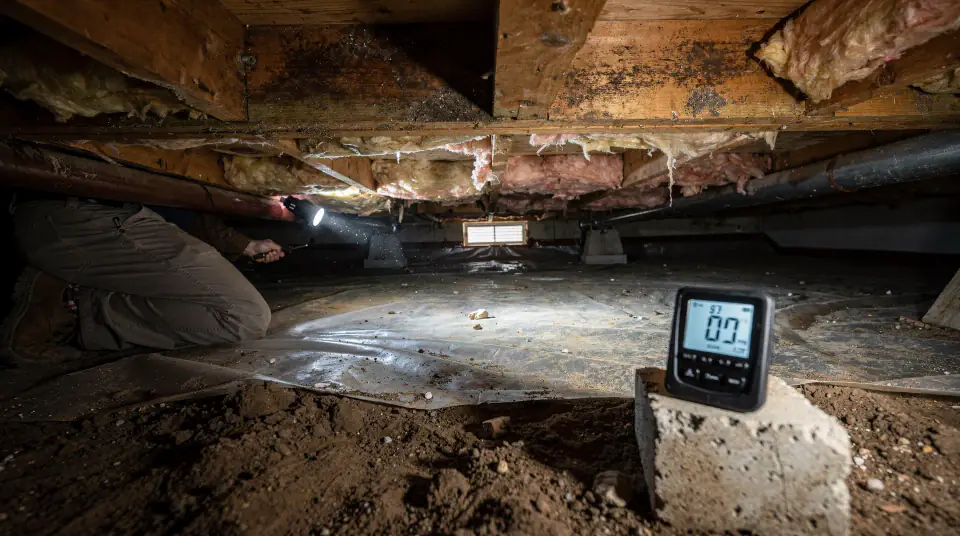
Crawl space water damage often hides in plain sight. A damp crawl space occurs when moisture levels build up to the point that the space remains consistently wet, humid, or prone to condensation rather than dry and stable. Central Iowa homeowners who catch these indicators early avoid structural repairs that grow more expensive by the month.
Persistent moisture beneath a home affects air quality, structural components, and overall comfort. In many cases the floor looks dry while humidity quietly damages wood framing, insulation, and subflooring above. That silent progression is why inspections matter.
What does crawl space moisture look like in Iowa homes?
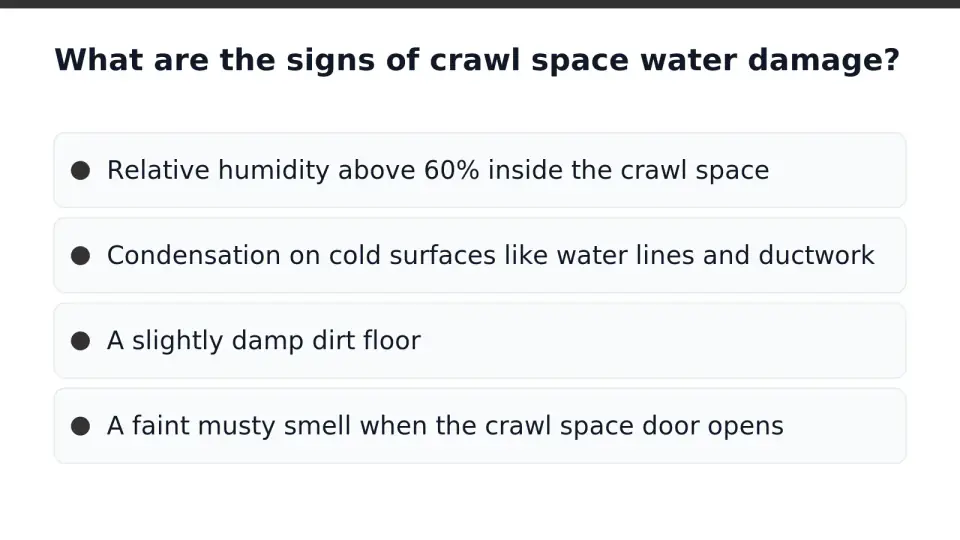
Several visible and measurable signs point to crawl space moisture Iowa homeowners should not ignore:
- Relative humidity above 60% inside the crawl space
- Condensation on cold surfaces like water lines and ductwork
- A slightly damp dirt floor
- A faint musty smell when the crawl space door opens
These indicators rarely appear alone. Condensation on ductwork combined with a musty odor signals a moisture problem that has already begun affecting the home above.
Can crawl space water damage exist without standing water?
Yes. Standing water is not required for damage to occur. Humidity alone, sustained above 60%, creates conditions where wood framing and insulation absorb moisture continuously. The subflooring above the crawl space suffers even when the visible floor stays dry. Crawl space water damage in Central Iowa frequently develops this way, especially during humid summers and after snowmelt saturates the soil.
Homeowners who notice any combination of these signs benefit from a professional assessment before foundation repair becomes necessary.
How does crawl space moisture affect indoor air quality?
Crawl space moisture degrades indoor air quality through a direct physical pathway. Air from the crawl space rises into living areas, carrying musty odors, mold spores, and humidity that compromise respiratory health and home comfort. The stack effect pulls damp, contaminated air upward through floor gaps, wall cavities, and plumbing penetrations. Homeowners in Central Iowa face this problem year-round, but winter conditions intensify the damage.
What happens when crawl space air enters the home?
Moisture-laden air from beneath the house introduces three persistent problems. Musty odors settle into furniture and fabrics. Wood rot develops in floor joists and subflooring. Pests find an easy path into the home through damp, softened materials. Crawl space encapsulation blocks this pathway by sealing moisture out from under the floor, which eliminates the air exchange that feeds these issues.
Why does winter make crawl space air quality worse?
Cold temperatures, snow melt, and freeze–thaw cycles place crawl spaces under extreme stress during Iowa winters. Problems that stay hidden in warmer months become obvious. Trapped moisture condenses on cold surfaces. Humidity spikes. The stack effect strengthens as heated indoor air rises, pulling more crawl space air into the home. Crawl space moisture Iowa conditions demand attention before seasonal damage compounds.
Can crawl space moisture cause structural and health issues?
Persistent moisture affects both air quality and structural components. Damp conditions promote mold growth that triggers respiratory irritation. Saturated wood loses strength over time. Crawl space water damage spreads beyond the crawl space itself when humidity migrates upward. A crawl space encapsulation system interrupts this cycle. Vapor barriers Iowa installations create a physical separation between ground moisture. The home’s interior, protecting air quality and structural integrity simultaneously. Foundation repair addresses any existing damage before encapsulation locks in a dry, stable environment.
What is crawl space encapsulation and how does it help?
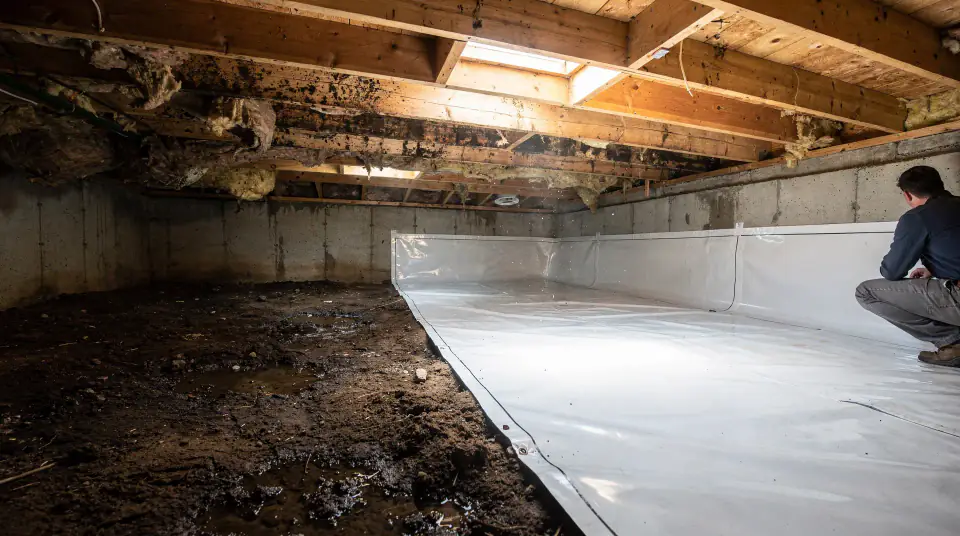
Crawl space encapsulation seals moisture out from under the floor, cutting off the path that musty air, wood rot, and pests use to enter a home. Without this barrier, Central Iowa homes face persistent humidity that feeds mold and weakens floor joists over time. The process transforms a damp, open crawl space into a dry, conditioned zone that protects the entire structure above it.
How does encapsulation control crawl space moisture in Iowa?
Iowa’s clay-heavy soils and seasonal snowmelt push moisture into crawl spaces year-round. Encapsulation addresses crawl space moisture Iowa conditions by installing a heavy-duty liner across the floor and up the foundation walls. This liner blocks ground moisture from rising into the space. Sealed vents and taped seams prevent outside air from carrying humidity inside. The result is a stable environment where condensation cannot form on joists or subflooring.
What role do vapor barriers play in the system?
Vapor barriers Iowa installations form the core of every encapsulation project. A reinforced polyethylene sheet covers the crawl space floor and extends up foundation walls, creating a continuous moisture block. Dry Duck Basement Waterproofing includes vapor barrier installation as a standard component of its encapsulation service. The barrier stops water vapor migration at the source, keeping relative humidity low enough to prevent structural decay.
Encapsulation drops relative humidity to a stable, lower level. Documented by foundation repair specialists who have performed this work across Iowa since 1994. That stability eliminates the condensation cycles that cause crawl space water damage and gradual wood deterioration. Homeowners who invest in a full crawl space encapsulation system gain long-term protection for their foundation repair needs, avoiding the costly structural fixes that unchecked moisture eventually demands.
When should you call a professional for foundation repair?
Foundation problems demand professional attention the moment they become visible. A free inspection and written estimate identifies issues such as leaks, moisture, and structural concerns before they compromise a home’s safety. Homeowners who delay professional evaluation risk accelerating damage that multiplies repair costs.
Winter does not create crawlspace damage. It reveals and accelerates existing problems that need professional evaluation, according to the Top 5 Crawlspace Problems in Winter report. What starts as a hairline crack in October can widen into a structural threat by February. Freeze-thaw cycles exploit every weakness already present in the foundation.
What signs indicate a foundation needs immediate repair?
Stair-step cracks in brickwork, doors that suddenly stick, and gaps around window frames signal movement below. Standing water or persistent crawl space moisture Iowa conditions after rain point to drainage failure. These symptoms never resolve on their own.
How does professional foundation repair protect a home long-term?
Licensed and insured technicians provide professional installation with warranty protection for lasting results. The process combines professional crack repair methods with comprehensive waterproofing to stop water at its source. Clear pricing, quality workmanship, and lasting results backed by warranties distinguish professional service from temporary patches.
Foundation repair in Central Iowa requires understanding the region’s clay-rich soils and deep frost lines. A proper fix addresses both the structural damage and the moisture driving it. Crawl space water damage left untreated spreads rot through floor joists and invites mold into living spaces. Professional vapor barriers Iowa installations block ground moisture before it reaches wooden framing. The investment in expert repair preserves property value and eliminates the health risks of a chronically wet foundation.
FAQ
Why is crawl space moisture a problem in Central Iowa?
Central Iowa’s clay-rich glacial soils trap water under homes, causing wood rot, mold growth, and musty indoor air.
Conclusion
Central Iowa homeowners who recognize the signs of crawl space moisture problems (musty air, condensation, or visible damage) should act before winter compounds the issue. A professional inspection identifies the source of the problem and provides a written plan for lasting protection. Encapsulation and vapor barrier installation stop moisture at its source, preserving both air quality and structural integrity. Taking that step now prevents the costly, accelerating damage that unchecked crawl space moisture inevitably brings.