

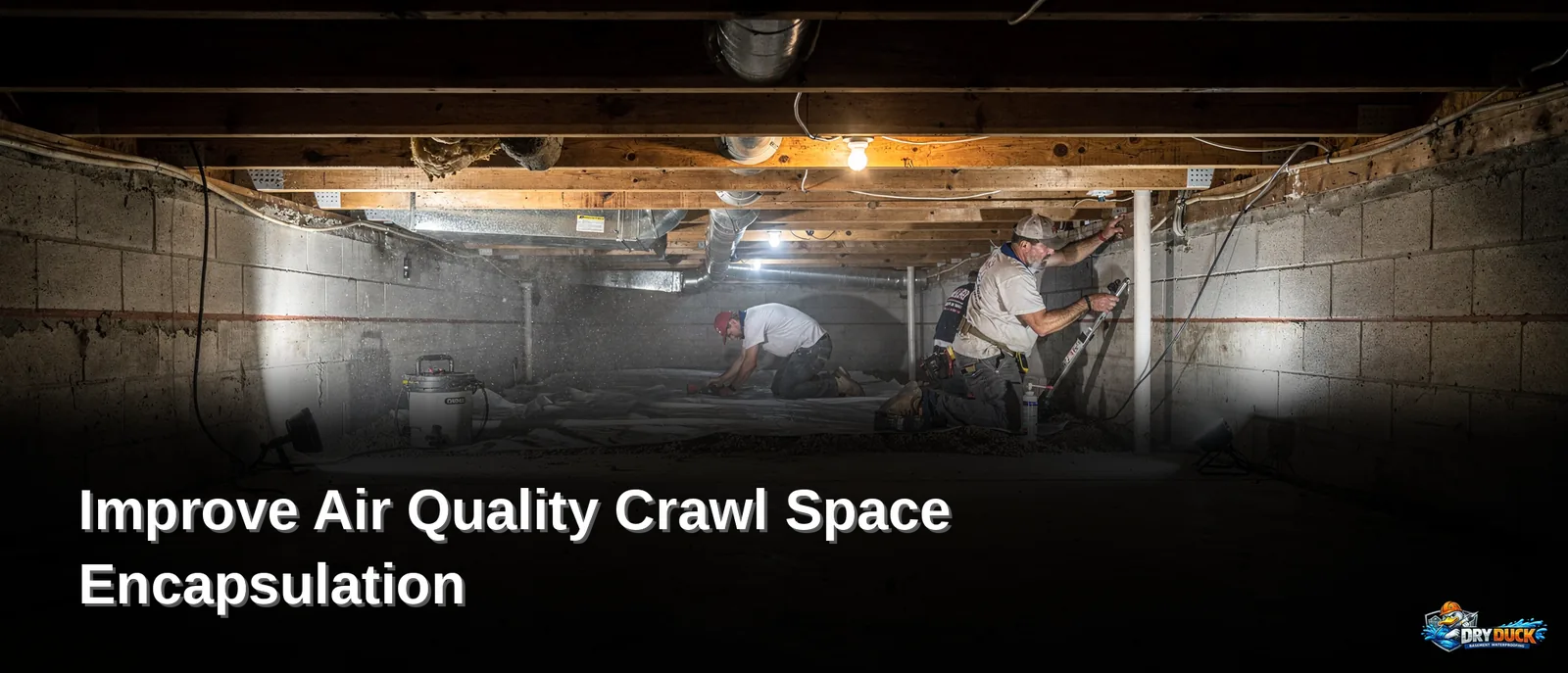
Crawl space encapsulation directly improves indoor air quality in Des Moines homes by sealing out moisture with a vapor barrier, stopping musty odors, wood rot, and pests from entering living spaces. Dry Duck Basement Waterproofing installs sealed crawl space encapsulation systems with dehumidifiers for Des Moines-area homeowners who want healthier air upstairs and a drier foundation environment. This article explains why damp crawl spaces affect the rooms above, how full encapsulation differs from a floor-only vapor barrier, and what a complete system includes.
Why does a damp crawl space hurt air quality?
Damp air beneath a home rises. Musty odors, mold spores, and moisture travel upward through floor cavities and settle into living spaces above, quietly undermining comfort throughout the house. A crawl space left unsealed rarely stays contained; it shares its air with every room upstairs.
Des Moines homes face a specific version of this problem. Mixed glacial soil deposits and a shallow seasonal water table create moisture conditions that push humidity into crawl spaces at rates many homeowners underestimate. Older housing stock across the metro compounds the issue. Aging foundations and outdated venting were rarely designed with sealed, controlled crawl spaces in mind.
Why do older Des Moines homes struggle more with crawl space moisture?
Vintage construction methods left many foundations without proper vapor barriers or drainage planning. Decades of exposure to shifting glacial soils and seasonal water tables give mold and moisture more opportunity to establish themselves.
Can a damp crawl space actually cause allergy symptoms indoors?
Yes. Moisture infiltration and mold growth restrict healthy airflow and elevate airborne allergens. Occupants exposed to that air over time face real respiratory risks, not just an unpleasant smell.
Left unaddressed, the pattern typically includes:
- Persistent musty odor noticeable in main living areas
- Visible or hidden mold growth on floor joists
- Increased allergy or respiratory irritation among household members
- Wood rot weakening structural framing over time
Sealing the crawl space cuts off that pathway before it reaches the rooms overhead. For a broader look at services and contractors, see our guide to crawl space companies.
How does encapsulation improve crawl space air quality?
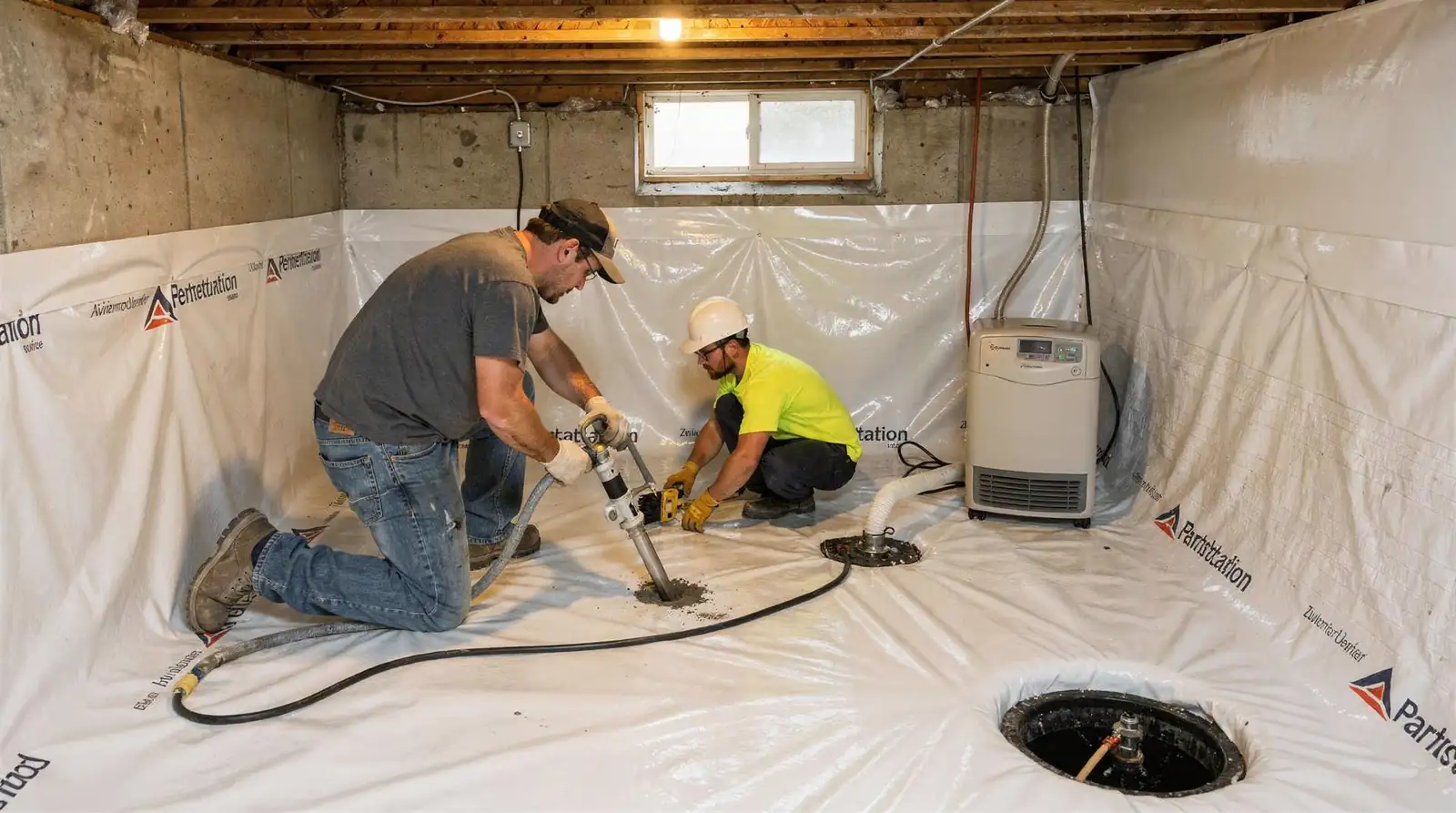
Full sealing closes off the pathways that let musty, damp air rise into Des Moines living rooms and bedrooms. Traditional vapor barriers cover the floor but leave vents open to outside humidity, giving moisture a constant way back in. Encapsulation wraps the floor, walls, and vents in sealed plastic sheeting, cutting off that route entirely. That difference matters for Des Moines homes, where seasonal humidity swings push damp air through any open gap.
Because the crawl space is fully closed off, a dehumidifier and sump pump take over the job of controlling moisture. Together they keep the space clean and dry through Iowa’s humid summers and wet spring thaws rather than reacting after moisture already builds up.
Sealing off the crawl space also removes the path mold spores, bacteria, and pests use to travel upward into the home. Fewer contaminants below the floor means fewer allergens circulating through vents and rooms above.
What does a complete encapsulation system include?
A properly designed system pairs vapor barrier installation with insulation and dehumidifier installation to manage moisture at every level. This layered approach addresses:
- Vapor barrier installation to block ground moisture
- Insulation to stabilize temperature and reduce condensation
- Dehumidifier installation to maintain consistent dryness
The result: a dry crawl space and, as homeowners often describe it, noticeably cleaner air upstairs.
What should Des Moines homeowners do next?
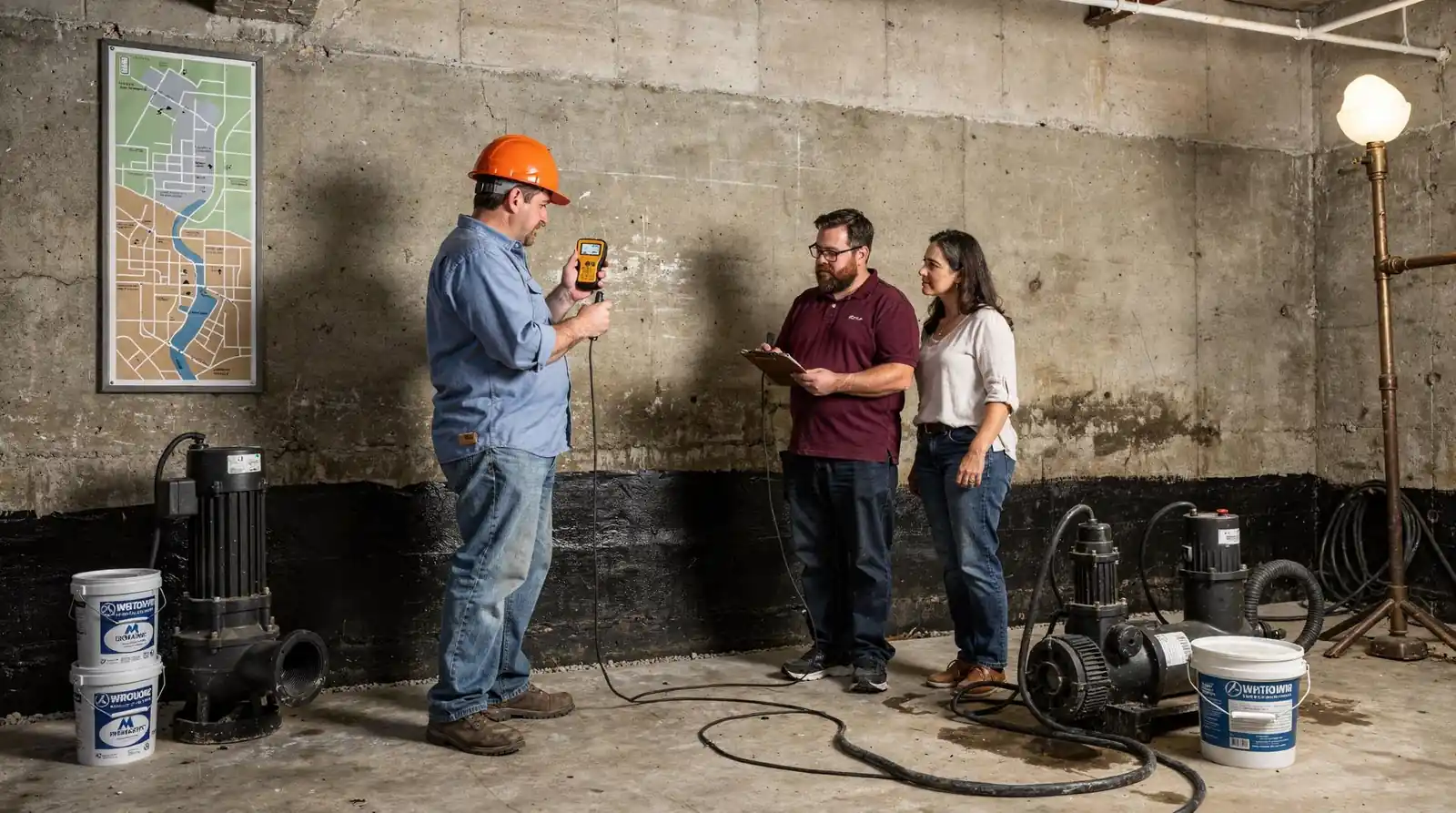
A free inspection with transparent pricing answers most Des Moines homeowners’ first question about musty crawl spaces: what is this going to cost, and who is coming out? No high-pressure sales tactics accompany the visit, just a straightforward look at moisture sources and a written plan. Des Moines sits within regular routing for crews already covering nearby communities, so scheduling an evaluation does not require a special trip or a long wait.
Central Iowa winters compound the problem. Seasonal freeze-thaw stress still adds pressure to block and poured walls alike. That seasonal stress can worsen existing gaps around a crawl space, letting damp air and allergens seep upward into living spaces.
How do homeowners know if their crawl space needs attention?
Musty odors, visible dampness, or unexplained allergy flare-ups are common warning signs. Homeowners noticing these symptoms are not imagining the problem, and they are far from alone in central Iowa.
What happens during a crawl space evaluation?
A technician inspects moisture sources, checks insulation and barrier conditions, and explains findings in plain language. The goal is to improve air quality in the crawl space before mold or wood rot spreads further.
Homeowners ready to act can describe what they are seeing and request a visit.
FAQ
How does encapsulation improve air quality in a crawl space?
Encapsulation wraps the floor, walls, and vents in sealed plastic sheeting, cutting off the pathway that lets damp, musty air rise into living spaces, while a dehumidifier and sump pump control ongoing moisture.
Why do older Des Moines homes struggle more with crawl space moisture?
Vintage construction often lacks proper vapor barriers or drainage planning. Decades of exposure to shifting glacial soils and seasonal water tables give mold and moisture more opportunity to establish themselves below the main floor.