

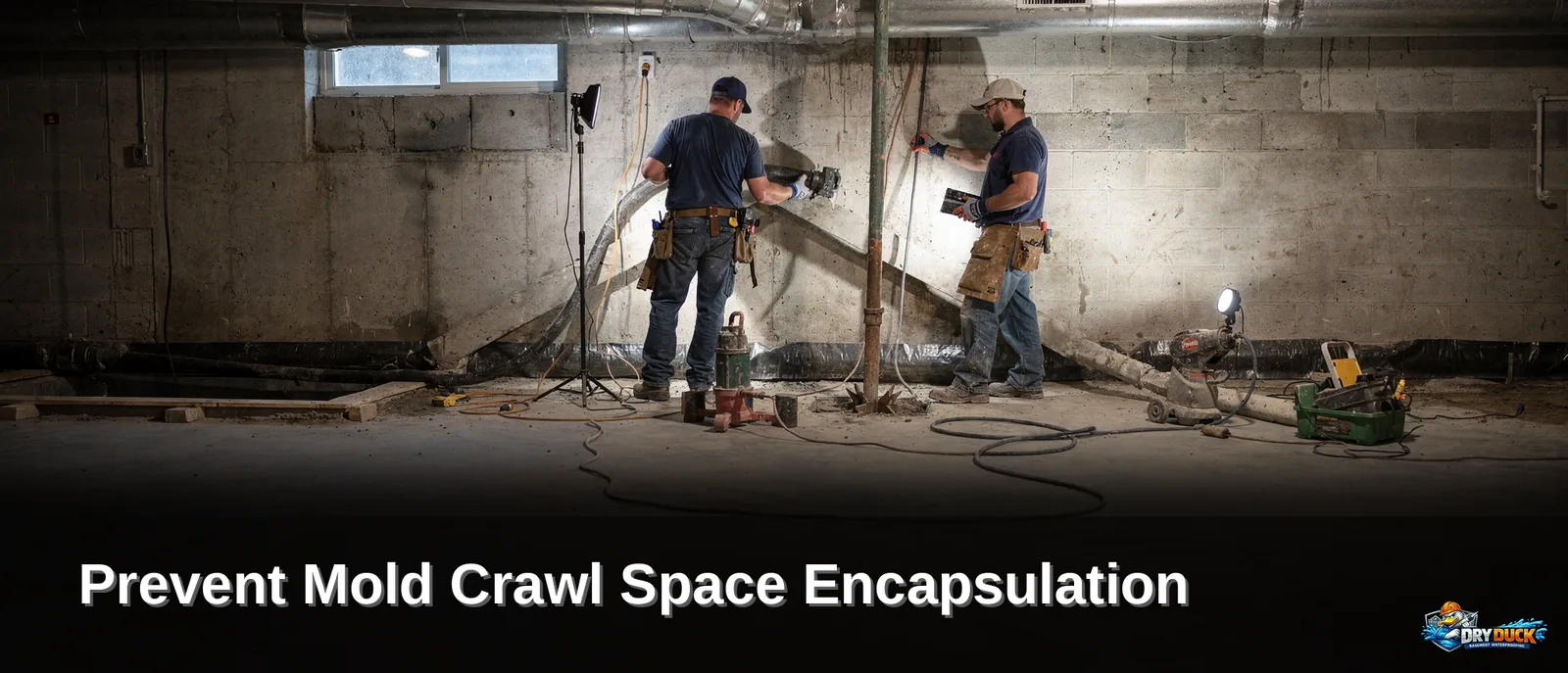
Crawl space encapsulation prevents mold growth by sealing out moisture and humidity year-round. Dry Duck Basement Waterproofing serves Des Moines, IA with crawl space encapsulation that installs vapor barriers to stop water intrusion, protecting structural wood and improving indoor air quality throughout the home. Sealed barriers block musty air, wood rot, and pests, producing cleaner air upstairs and a drier, healthier foundation environment for central Iowa homeowners.
Why do Des Moines crawl spaces grow mold?
Clay-rich soil, heavy rains, and spring snowmelt push constant moisture against Des Moines foundations, and that pressure finds its way into crawl spaces. Mold needs three things to thrive: darkness, stagnant air, and dampness. Most central Iowa crawl spaces offer all three by default. Add a Des Moines winter: frost depth reaches roughly 42 inches, and the seasonal freeze-thaw cycle stresses block and poured walls year after year. Those stress points often become new entry paths for groundwater, feeding the very conditions mold needs to spread.
What happens if a crawl space stays unsealed?
An open, unsealed crawl space rarely stays a small problem. Musty air, wood rot, and pests all exploit the same gaps and cracks, moving freely between the ground and the living space above. Left unaddressed, this moisture exposure can progress into serious structural damage and costly repair bills down the road.
Crawl space encapsulation interrupts that cycle by sealing off the space from outside moisture. Homeowners considering the process should watch for these warning signs:
- Musty or earthy odors noticeable in upstairs rooms
- Visible condensation or standing water beneath the home
- Sagging or spongy flooring above the crawl space
- Rusted or corroded metal fixtures nearby
Addressing these signs early helps prevent mold growth before it spreads into insulation, subfloors, or framing, protecting both air quality and structural integrity long-term. Basement moisture can cause similar issues upstairs; see how to eliminate mold and mildew in your basement for related guidance.
How does crawl space encapsulation prevent mold?
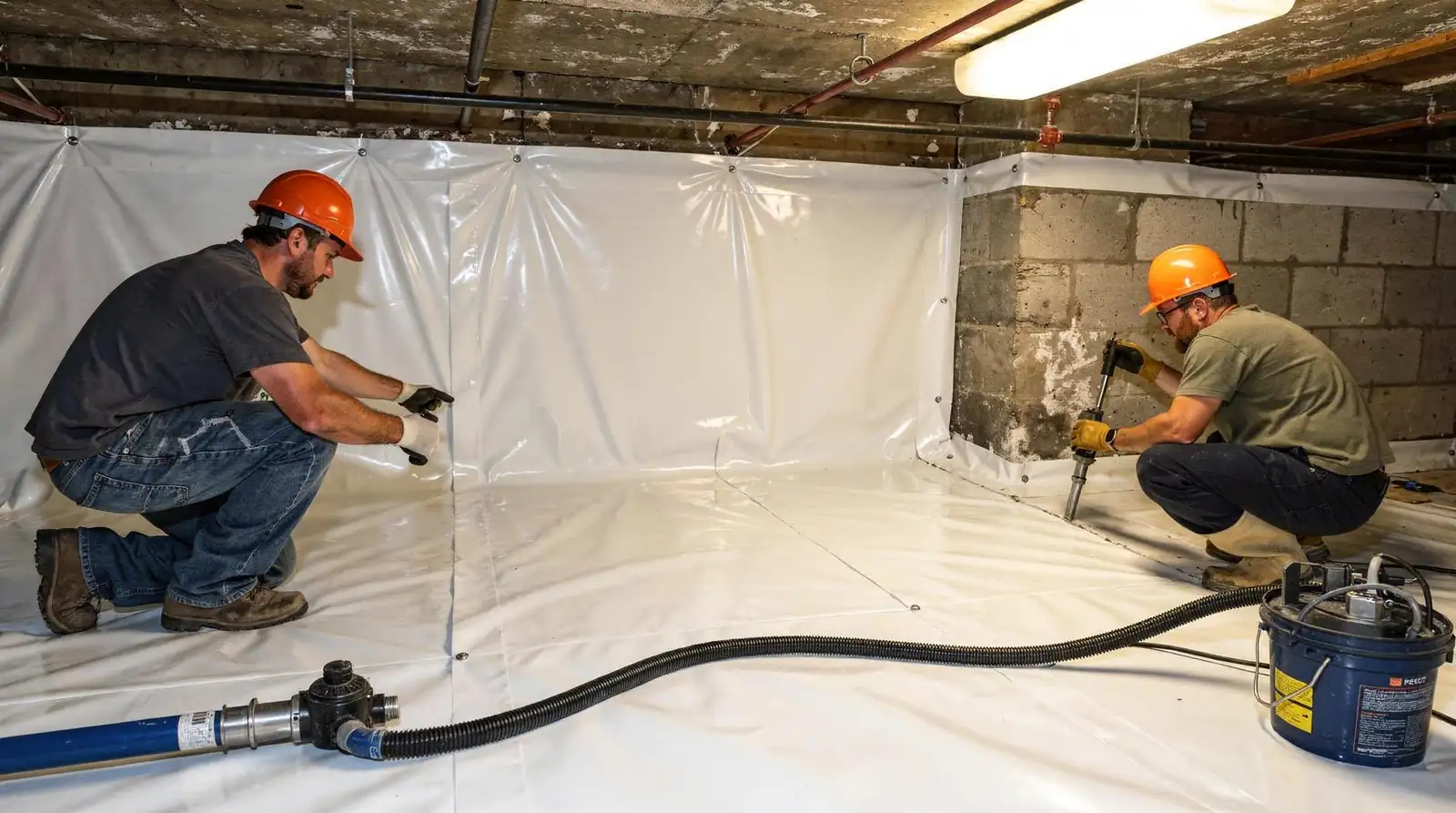
Sealing off the crawl space blocks the moisture pathway that mold needs to survive. A properly installed vapor barrier and sealed foundation vents create a physical barrier against ground moisture, protecting the structural wood framing above while shutting down mold growth at the source. For Des Moines homeowners, clay soil holds groundwater close to the foundation, and that barrier does the heavy lifting no dehumidifier alone can match.
Protection against moisture and mold ranks as the central purpose of this work, not a side benefit. Once the crawl space is sealed, damp air stops rising into the floor joists and subfloor above. Musty odors, wood rot, and pest activity all lose the easy entry point they depend on.
Why does moisture cause mold under Des Moines homes?
Central Iowa’s humid summers and heavy clay soil trap groundwater beneath foundations for weeks at a time. Without a barrier, that moisture evaporates upward into the crawl space, settling on wood framing and insulation. Mold spores need only damp surfaces and stagnant air to multiply, both of which an unsealed crawl space provides year-round.
What does encapsulation actually stop?
A sealed crawl space cuts off:
- Groundwater vapor rising through exposed dirt floors
- Humid outside air entering through open vents
- Wood rot from prolonged moisture contact
- Pest paths that thrive in damp, dark conditions
Dry Duck Basement Waterproofing supports this protection with free inspections, transparent pricing, and warranty-backed crawl space and foundation work serving Des Moines-area homes.
What other benefits come with a sealed crawl space?
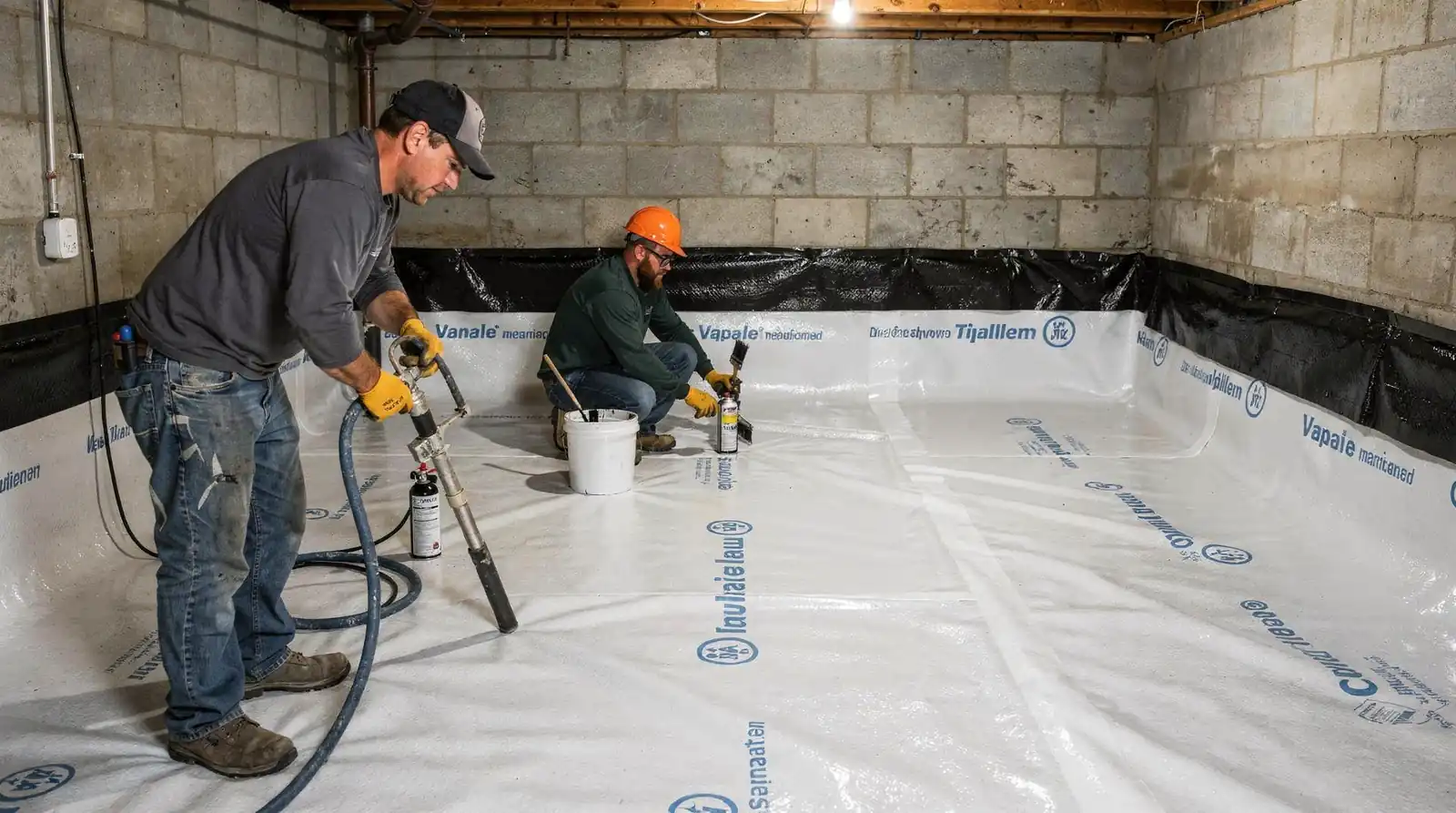
Sealed crawl spaces protect far more than the wood joists overhead. Air upstairs breathes easier, floors stay firmer underfoot, musty smells fade, and energy bills often shrink once outside humidity stops bleeding into the home. For Des Moines homeowners, that combination matters through humid summers and damp spring thaws when moisture below the floor tends to peak. Encapsulation also supports indoor air quality upstairs when mold and musty crawl space air are the root cause.
Does crawl space encapsulation really help prevent mold?
Yes. Controlling moisture is the direct path to mold prevention. Mold needs damp wood and stagnant air to spread, and a sealed, vapor-barrier-lined crawl space removes both conditions.
Will sealing the crawl space affect heating and cooling costs?
Often, yes. A tighter crawl space means conditioned air stays where it belongs, easing the load on furnaces and air conditioners.
Dry Duck Basement Waterproofing, based in Des Moines, IA, sends inspection and installation crews directly to homes across the metro. Every crawl space project comes from a licensed, insured team backed by warranty protection and straightforward pricing. Solutions are built around each home’s layout and each household’s budget, so homeowners get:
- Improved indoor air quality
- Sturdier, more level floors
- Reduced musty odors
- Lower monthly energy costs
FAQ
How does crawl space encapsulation prevent mold?
Sealing the crawl space blocks the moisture pathway mold needs by installing vapor barriers and sealing foundation vents. This stops damp air from rising into floor joists and shuts down mold growth at the source.
Why do Des Moines crawl spaces grow mold so easily?
Clay-rich soil, heavy rains, and spring snowmelt push moisture against foundations. Darkness, stagnant air, and dampness give mold everything it needs. Winter freeze-thaw cycles also stress foundation walls, creating new entry paths for groundwater.
What warning signs indicate a crawl space needs encapsulation?
Musty odors upstairs, visible condensation or standing water, sagging floors, and rusted metal fixtures signal moisture problems. Address these signs before mold spreads into insulation, subfloors, or framing.