

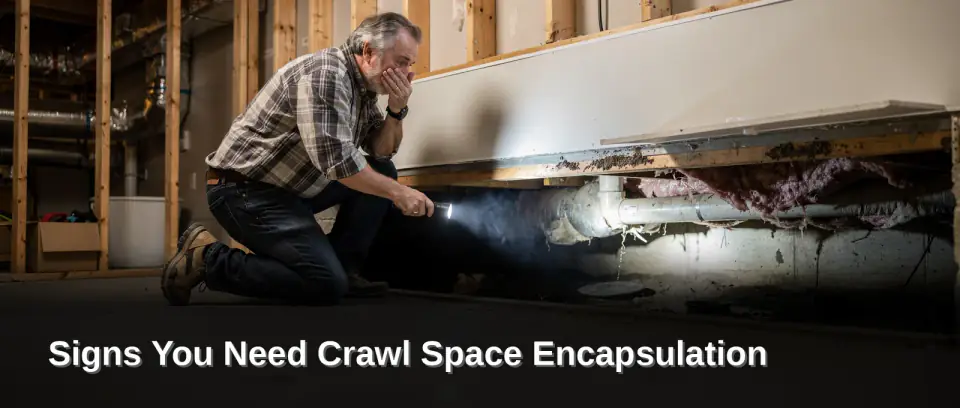
Musty odors, damp insulation, high humidity, and cold floors signal crawl space encapsulation needs in Des Moines. Spring snowmelt raises the shallow water table, leaving crawls damp by March. Dry Duck Basement Waterproofing provides professional encapsulation services, sealing moisture from under floors to protect homes from wood rot, pests, and poor air quality.
Key Takeaways
- Spring snowmelt raises the shallow water table, leaving Des Moines crawl spaces damp by March.
- Persistent musty odors inside a home signal moisture intrusion carrying mold spores from the crawl space.
- Visible condensation on ductwork and warped floor joists indicate crawl space moisture problems.
- Cold floors in winter trace back to a vented crawl space allowing outside humidity to move freely.
Is that musty smell coming from your crawl space?
A persistent musty odor inside a Des Moines home signals moisture intrusion below the floor. That damp, earthy scent moves upward from the crawl space, carrying mold spores and bacteria into living areas. Homeowners who ignore the smell risk worsening indoor air quality and gradual structural damage.
The smell itself is a warning. Signs of crawl space moisture include visible condensation on ductwork, warped floor joists, and a stale odor that returns even after airing out rooms. In central Iowa, seasonal snowmelt pushes the shallow water table higher. Crawl spaces that stay dry through October turn damp and odorous by March. Cold floors in winter often trace back to the same source.
How does crawl space moisture affect the air upstairs?
A vented crawl space allows outside humidity to move freely through the under‑floor area. Traditional crawl spaces remain damp for long stretches, and that dampness feeds mold colonies. Professional Crawl Space Encapsulation in Clive, IA reports that these conditions create a direct pathway for mold, bacteria, and pests to reach the air occupants breathe. Every cycle of the furnace pulls that contaminated air into the home.
What stops the odor at its source?
Crawl space encapsulation seals the floor, walls, and vents with a heavy‑duty vapor barrier. Dry Duck Basement Waterproofing applies an encapsulation system that blocks moisture, wood rot, and pests from entering the home. By eliminating the damp environment, the process removes the conditions mold needs to grow. The company’s approach prevents mold with crawl space encapsulation in Des Moines and breaks the cycle that keeps the musty smell returning.
Crawl space moisture solutions like dehumidifier installation and sump pump integration reinforce the barrier. Encapsulation eliminates the path for contaminants, so the air upstairs stays cleaner without constant air fresheners or repeat cleanings. Foundation stability also improves. When moisture stops soaking into support beams, the risk of rot and foundation repair drops significantly.
A crawl space that smells musty today signals a problem that worsens with each wet season. Sealing the space cuts off that problem at the source.
Do you notice high humidity or condensation in your home?
High indoor humidity and window condensation signal a moisture problem that often starts beneath the floor. In Des Moines, the shallow water table under the Des Moines Lobe rises to within a few feet of the surface during spring snowmelt. That rising water drives moisture upward into crawl spaces and eventually into living areas. A crawl space that stays dry in October turns damp and musty by March. Homeowners who ignore these signs of crawl space moisture risk mold growth, wood rot, and compromised indoor air quality.
Why does humidity spike during certain seasons?
Seasonal water table changes create predictable humidity cycles. The ground releases moisture as temperatures climb and snow melts. That moisture enters the crawl space through the dirt floor and foundation walls. Without a barrier, the damp air rises into the home through gaps and floorboards. Condensation forms on windows and cold surfaces. The cycle repeats every spring, and each year the damage compounds.
What stops crawl space moisture from reaching living spaces?
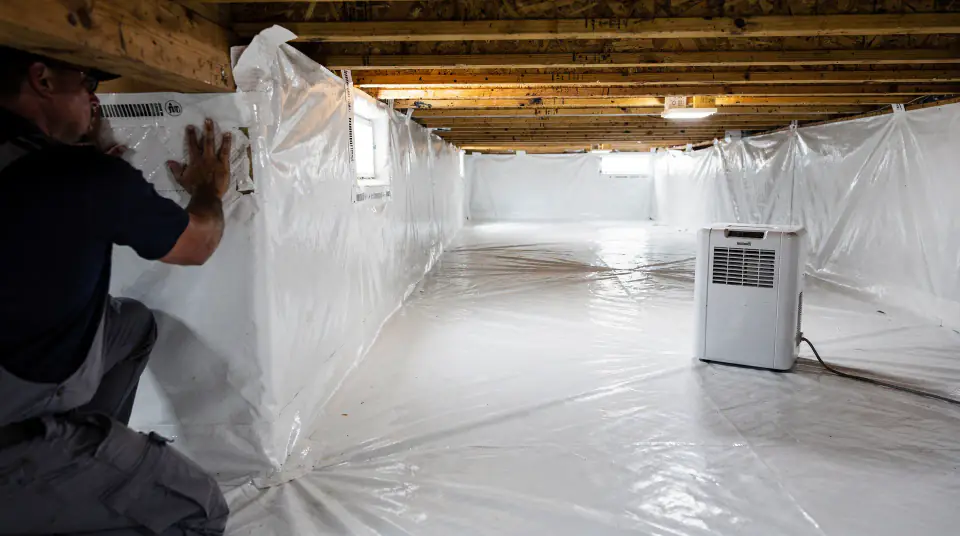
Crawl space encapsulation provides a permanent barrier against ground moisture. The process includes vapor barrier installation across the floor and walls, plus a dehumidifier installation to control ambient humidity. An encapsulated crawl space is completely sealed off, including the vents. A dehumidifier maintains dry conditions inside the sealed space. The system prevents damp air from migrating upstairs. Homeowners who invest in crawl space moisture solutions eliminate the source of condensation and musty odors. For properties where moisture has already caused structural concerns, foundation repair addresses cracks and settling before encapsulation begins.
Dry Duck Basement Waterproofing assesses crawl space conditions and designs systems suited to Des Moines properties. The company’s approach to improving air quality with crawl space encapsulation targets the seasonal humidity issues Des Moines residents face each spring. A sealed crawl space protects floors, air quality, and the foundation itself.
Are your floors cold or your energy bills climbing?
Cold floors and rising utility costs often trace back to an unsealed crawl space. Vented crawl spaces act as a direct conduit for outdoor air, forcing heating systems to work harder throughout Des Moines winters. Dr. Energy Saver identifies these spaces as a major home energy efficiency issue, driving up monthly bills unnecessarily.
Homeowners in Des Moines experience this problem acutely. The shallow water table beneath the Des Moines Lobe rises with spring snowmelt, saturating the ground under homes. That moisture migrates upward, chilling floorboards and increasing indoor humidity. A furnace then cycles more frequently, consuming extra fuel without delivering lasting comfort.
How does a vented crawl space increase energy costs?
Stack effect physics pulls outside air through crawl space vents. Cold, damp air enters below while heated air escapes through upper levels. This continuous exchange forces HVAC equipment to compensate, raising energy consumption month after month.
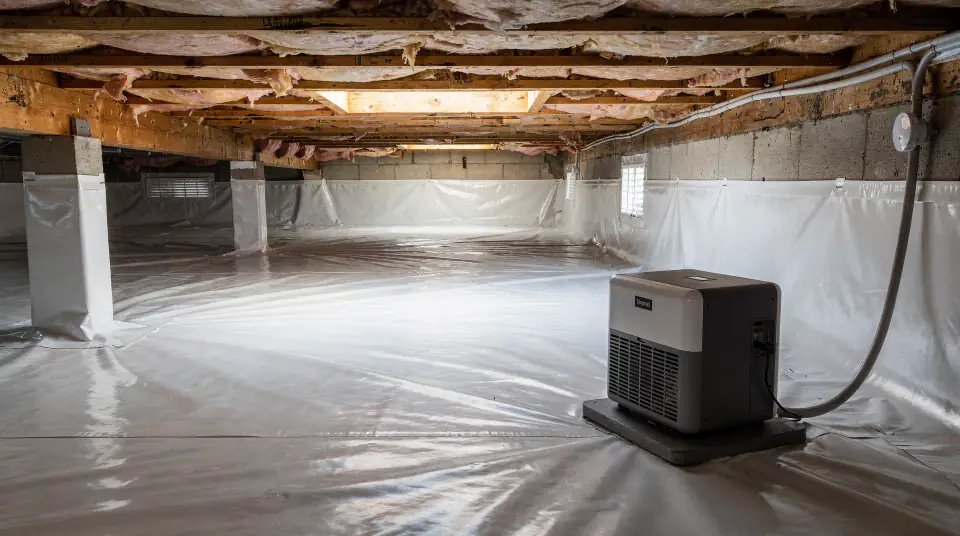
Crawl space encapsulation interrupts this cycle. Sealing the space beneath the floor blocks moisture and drafts at the source. The result is warmer floors and a heating system that runs fewer cycles to maintain set temperatures.
What changes after a crawl space is sealed?
Sealing and insulating the crawl space delivers three measurable benefits. Energy savings appear first, as conditioned air stops leaking through the floor assembly. Comfort follows immediately, with floor surfaces staying warmer to the touch. Home value increases as well, since a dry, sealed foundation signals proper maintenance to future buyers.
Dry Duck Basement Waterproofing installs encapsulation systems that seal moisture out from under the floor. Musty air, wood rot, and pests lose their easy path into the home. The company’s approach addresses the root cause rather than masking symptoms, giving Des Moines homeowners a permanent fix for cold floors and climbing energy bills.
Have you spotted wood rot, pests, or foundation cracks?
Wood rot, pest infestations, and foundation cracks signal uncontrolled moisture beneath a home. These visible problems trace back to a damp, unsealed crawl space that allows water vapor to rise into floor framing and living areas. Homeowners who ignore these warning signs risk structural deterioration that escalates repair costs sharply. Early detection of water damage is essential because foundation problems compromise a home’s structural integrity over time.
Crawl space encapsulation stops this cycle. Sealing moisture out from under the floor cuts off the path that musty air, wood rot, and pests use to enter a home. Without that barrier, damp conditions invite termites, carpenter ants, and fungal growth that feed on wet joists and subflooring. The damage spreads quietly until floors feel spongy or doors begin to stick.
What causes foundation cracks in Des Moines homes?
Wet soils in central Iowa push inward on foundation walls. When drainage or compaction was thin during construction, cracks and seepage appear sooner than homeowners expect. The seasonal freeze-thaw cycle widens those cracks, letting more water in with each passing year.
Signs of crawl space moisture rarely stay hidden for long. Homeowners notice:
- Musty odors drifting up through floorboards
- Hardwood floors cupping or buckling
- Increased indoor humidity that air conditioning cannot control
- Visible mold on baseboards or lower drywall
These indicators point to a moisture source below the house. Crawl space moisture solutions address the root cause before joists rot and foundation walls bow. Professional encapsulation includes vapor barrier installation, insulation, and dehumidifier placement to lock out ground moisture permanently.
Can foundation cracks lead to bigger structural problems?
Foundation cracks widen under constant hydrostatic pressure. Water seeps through, eroding mortar and exposing steel reinforcement to rust. What starts as a hairline crack becomes a structural liability. Foundation repair in Des Moines often begins with controlling the water that caused the damage. Dry Duck Basement Waterproofing assesses both the crack and the moisture source, then installs drainage and encapsulation systems that prevent recurrence. The company’s approach protects the foundation from the wet soils that created the problem in the first place.
FAQ
What causes the musty smell in my Des Moines home?
Spring snowmelt raises the shallow water table, leaving crawl spaces damp by March. That dampness carries mold spores and bacteria upward into living areas.
How does crawl space moisture affect indoor air quality?
A vented crawl space allows outside humidity to move freely, feeding mold colonies. Every furnace cycle pulls that contaminated air into the home.
What does crawl space encapsulation do to stop moisture problems?
Dry Duck Basement Waterproofing seals the floor, walls, and vents with a heavy‑duty vapor barrier. This blocks moisture, wood rot, and pests from entering the home.
Conclusion
If you’ve noticed musty odors, cold floors, rising energy bills, or foundation cracks, the source likely sits in an unsealed crawl space. Encapsulation stops moisture at its origin, protecting your home’s structure, air quality, and comfort. Schedule a professional inspection to confirm the condition and receive a plan tailored to your Des Moines property. Acting now prevents costly structural damage and delivers lasting results you can rely on.