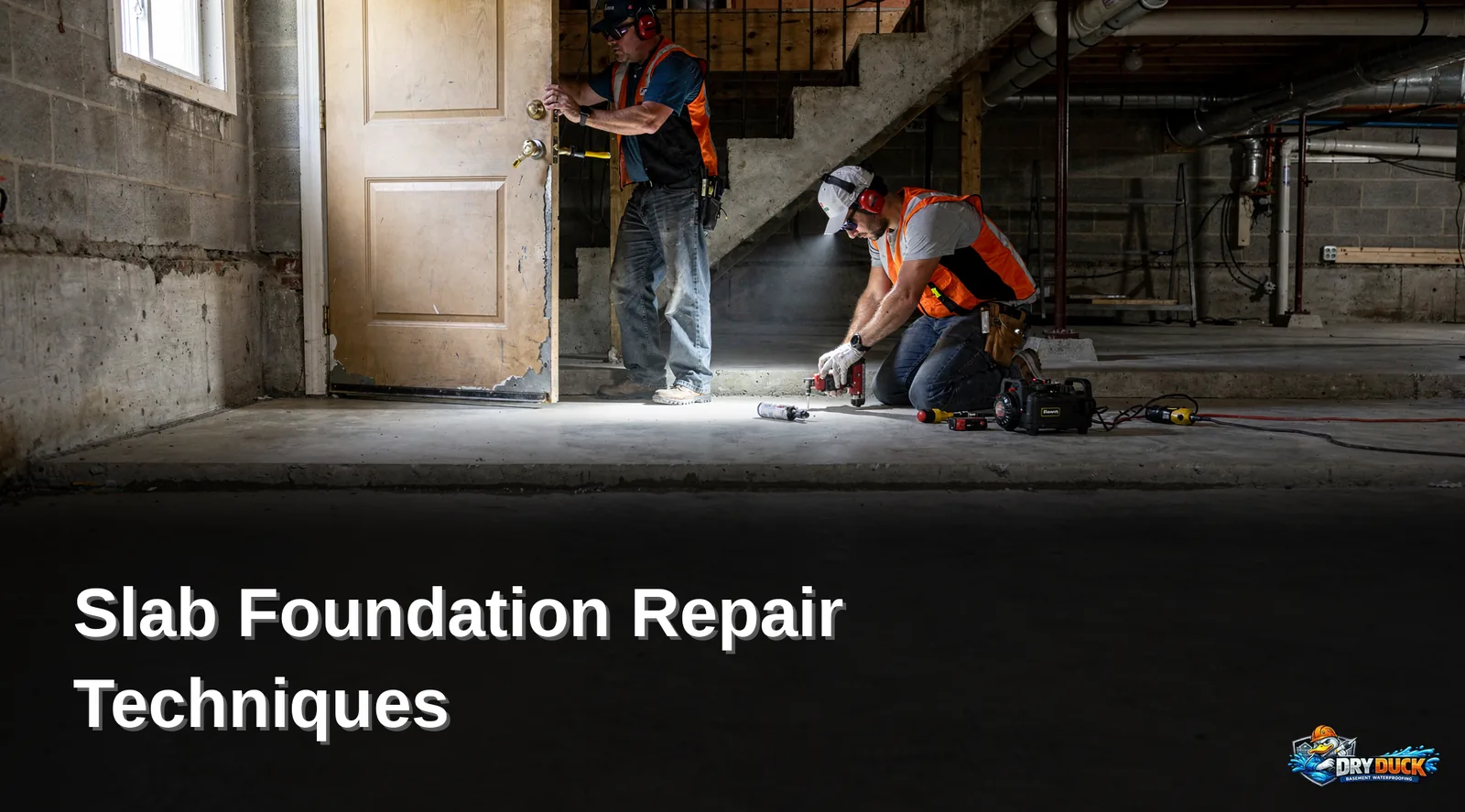
Slab foundation repair techniques address settlement and cracking through methods such as steel piering, which drives galvanized or epoxy-coated pilings into rock or hard soil to stabilize a sinking slab. Dry Duck Basement Waterproofing evaluates crack patterns, sticking doors, and uneven floors during free inspections, then recommends engineering solutions designed for local conditions. Learn more about our foundation repair.
What Should You Know Before Repairing a Slab?
A slab foundation consists of a concrete pad, typically 4 to 6 inches thick, poured directly on the ground without a basement or crawl space underneath. Central Iowa homeowners facing cracked floors or misaligned doorframes need to understand this structure before choosing a fix. Skipping proper diagnosis costs money twice: once for the wrong repair, and again for the correct one later.
Slab foundation repair techniques vary widely, and matching the right method to the actual cause of movement matters more than picking the fastest option. Before scheduling any work, homeowners should confirm a few basics:
- The age of the home and any known soil or drainage issues nearby
- Whether cracks are widening or stable over recent months
- Whether doors have started sticking or refusing to latch properly
- Past repairs, if any, and their outcomes
How can homeowners tell if a slab problem is serious?
Doors that won’t close properly, or that pop back open on their own, often signal foundation movement long before cracks become visible. This warning sign deserves attention early, since it points to shifting beneath the slab rather than a simple hardware issue.
Dry Duck Basement Waterproofing, based in Des Moines, brings direct knowledge of central Iowa soil behavior to every inspection. Homeowners receive a free inspection and transparent pricing, with no high-pressure sales tactics involved. That straightforward process has helped the company earn trust among local homeowners across the region.
How Do Experts Repair a Sinking Slab Foundation?
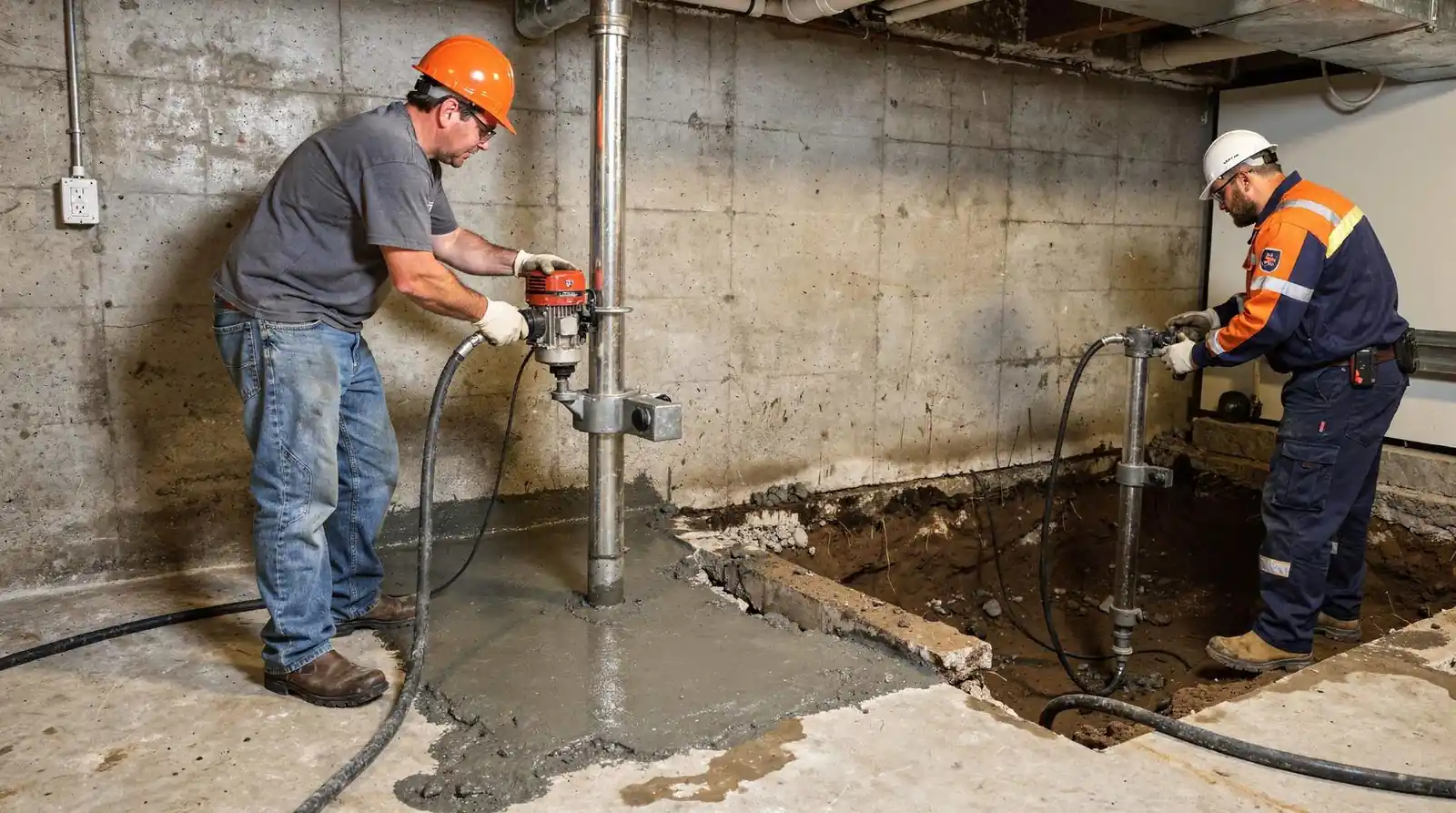
Engineers correct a sinking slab by transferring the home’s weight onto steel or helical piles driven to stable soil or bedrock, rather than simply patching surface cracks. Skipping this step lets floor cracks widen, doors keep sticking, and settlement accelerate until structural repair costs climb far higher. Two proven slab foundation repair techniques dominate the industry: steel piering and helical pile installation.
What is steel piering, and how does it stop a foundation from sinking?
Steel piering works by driving galvanized or epoxy-coated steel piles beneath the slab using a hydraulic arm. The piles push through soft soil until they reach rock or dense hard soil capable of bearing the structure’s weight. Once seated, the piers act as permanent supports, lifting and stabilizing the slab so leaning walls and settlement stop progressing.
Are helical piles a good alternative to steel piering?
Helical piles offer a less invasive path for many Central Iowa homes. Contractors install them directly through the floor slab, or raise sunken sections using a soil injection method that limits disturbance to yards and landscaping. The approach suits homeowners who want structural correction without extensive excavation.
A general repair sequence looks like this:
- Inspect the slab and surrounding soil to identify the settlement pattern.
- Select steel piering, helical piles, or soil injection based on soil depth and access.
- Drive or install the piles to load-bearing soil or bedrock.
- Elevator and stabilize the slab to correct level.
- Verify results and document the repair for warranty purposes.
Dry Duck Basement Waterproofing manages foundation correction alongside waterproofing and leak repair as one team. Homeowners consistently note that technicians explain each stage clearly as work progresses.
What Mistakes Should You Avoid After Repair?
Two mistakes cost Central Iowa homeowners the most after slab repair: ignoring lingering dampness and assuming every crack or shift is harmless. Chronic damp isn’t a normal quirk of an older Iowa home; it usually signals foundation pressure that repairs haven’t fully resolved. Treating it as background noise lets deeper problems develop unnoticed.
Some settling happens naturally as homes age, and minor unevenness rarely warrants alarm. But homeowners should still track changes closely after any slab foundation repair technique has been completed. Watch for these warning signs:
- Doors or windows that suddenly stick again
- New or widening floor cracks
- Damp spots that return after drying out
- Uneven flooring that worsens month to month
Should Homeowners Get a Follow-Up Inspection?
Yes — scheduling a follow-up inspection catches problems before they escalate. Homeowners can request a free inspection and written estimate to review any leaks, moisture, or structural changes without pressure to commit.
Dry Duck Basement Waterproofing dispatches crews from Des Moines on regular routes to nearby communities, keeping follow-up visits prompt rather than delayed.
FAQ
What is a slab foundation, and why does it need special repair methods?
A slab foundation is a concrete pad 4 to 6 inches thick poured directly on the ground with no basement or crawl space beneath it. Central Iowa’s clay-rich soil and moisture pressure cause settlement, so repairs require engineering solutions matched to these conditions.
How does steel piering stabilize a sinking slab?
A hydraulic arm drives galvanized or epoxy-coated steel piles beneath the slab until they reach rock or dense hard soil. The piers then act as permanent supports, lifting and stabilizing the slab so settlement stops progressing.
What should homeowners do if they notice sticking doors or cracked floors?
Sticking doors that pop open on their own often signal foundation movement before cracks appear, so early attention matters. Dry Duck Basement Waterproofing offers a free inspection, transparent pricing, and a lifetime warranty with no high-pressure sales tactics.
In closing, slab foundation repair requires professional assessment and timely intervention to prevent costly structural damage. Whether addressing cracks, settling, or moisture intrusion, the right repair technique protects your home’s integrity and your family’s safety. Dry Duck Basement Waterproofing brings licensed expertise. Quality workmanship to slab repairs throughout central Iowa, delivering solutions backed by warranties you can trust. Contact us for a free inspection and written estimate—we’ll identify the issue and outline a clear path to lasting protection.