

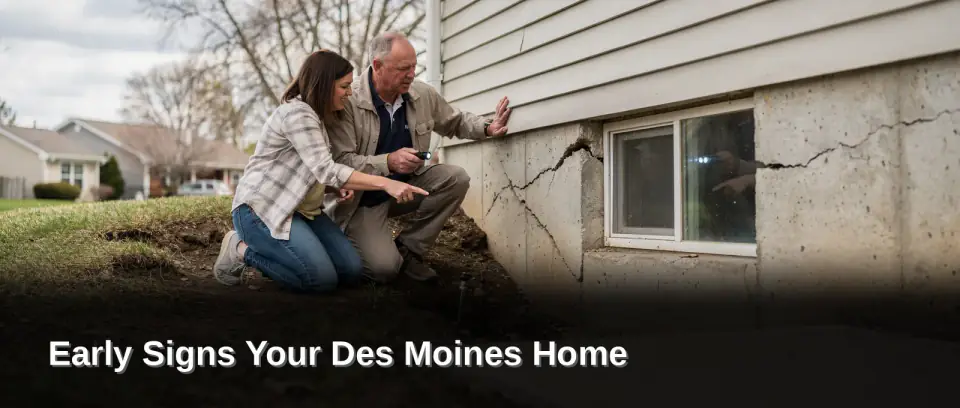
Early signs of foundation problems in Des Moines homes include visible cracks in walls or floors, sticking doors, and uneven floors. Dry Duck Basement Waterproofing provides free inspections to identify these issues early, preventing costly structural damage from delayed foundation repair. Left untreated, minor cracks can escalate into serious problems compromising a home’s integrity.
Key Takeaways
- Expansive clay soils in Polk County swell when wet and push inward against foundation walls.
- Deep seasonal frost in central Iowa heaves soil upward, widening existing cracks and creating new ones.
- Sticking doors and windows signal the foundation has shifted enough to misalign frames.
- Horizontal cracks and stair-step patterns in block foundations indicate serious pressure demanding immediate attention.
What causes foundation problems in Des Moines?
Des Moines foundations face relentless pressure from expansive clay soils and deep seasonal frost. These two forces work together, creating signs of foundation issues that homeowners often notice first as hairline cracks or sticking doors. Left unaddressed, the damage compounds quickly.
Polk County sits on clay-rich soils that swell dramatically when wet. As moisture saturates the ground, the soil expands and pushes inward against foundation walls. When drainage or compaction was thin during construction, cracks and seepage tend to show up sooner than people expect. The pressure does not release until the soil dries and contracts, leaving gaps that invite the next rain to repeat the cycle.
Why do Des Moines winters make foundation problems worse?
Frost depth reaches deep into the ground in central Iowa. Every winter, freezing temperatures drive that frost line deep into the ground, adding stress on block and poured walls alike. The freeze-thaw cycle heaves soil upward, then drops it back down, working against the foundation in a slow, grinding rhythm that widens existing cracks and creates new ones.
How does poor drainage accelerate foundation settlement Iowa?
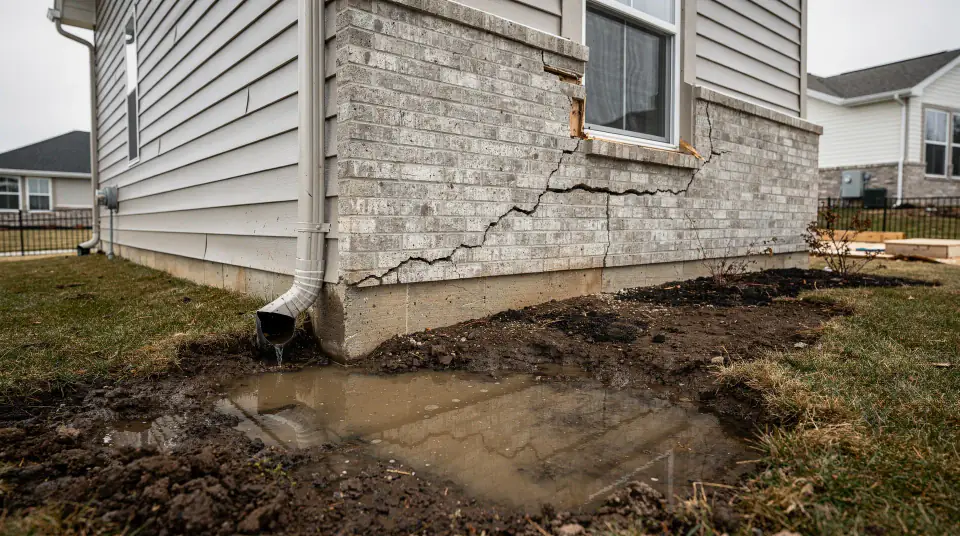
Excessive moisture and inadequate drainage rank among the most common threats to a home’s foundation, according to Olshan Foundation. Water that pools near the base of a home saturates the soil, reducing its load-bearing capacity. The foundation then settles unevenly, producing stair-step cracks in brickwork and gaps around window frames. Homes built quickly during development booms often lack proper compaction or drainage, which means cracks in foundation walls Des Moines appear earlier than in properties with more deliberate site preparation.
Foundation repair becomes necessary when these environmental stresses overwhelm the structure. Expanding and contracting soil, excessive moisture, and poor drainage combine to create conditions that no foundation can resist indefinitely. Homeowners who spot early warning signs benefit from reviewing essential DIY foundation repair tips to understand what minor fixes are possible and when professional intervention is required. Crawl space encapsulation offers another layer of defense by controlling moisture beneath the home before it migrates upward into the foundation system.
What are the first signs of foundation issues?
Foundation problems announce themselves through visible cracks, sticking doors, and uneven floors. Homeowners in Des Moines who catch these signals early avoid structural damage that compounds in cost and severity. A foundation that shifts even a fraction of an inch transfers stress throughout the entire house.
Cracks in foundation walls and floor slabs serve as the most common early warning. Hairline fractures in poured concrete or stair-step cracks along mortar joints in block walls indicate movement below the surface. Gaps that widen over weeks or months demand immediate attention. These openings allow moisture intrusion, which accelerates deterioration in Iowa’s freeze-thaw cycles.
Why do doors and windows suddenly stick?
Sticking windows and doors signal that the foundation has shifted enough to misalign frames. A door that scrapes the jamb or refuses to latch was not always that way. The frame distorts as the structure settles unevenly, binding the door or window in its opening. This binding worsens with seasonal soil changes common across Des Moines.
Foundation settlement reveals itself through floors that slope or dip. Walking across a room and sensing a downhill grade means the support beneath that section has compressed or washed away. Drywall fractures near doorways and ceiling corners frequently accompany this movement. The drywall tears because the framing behind it twists as the foundation drops.
Homeowners who notice these indicators benefit from a professional assessment. A detailed guide on how to spot foundation problems early outlines inspection methods suited to Iowa homes. The company provides free evaluations for Des Moines properties showing any combination of these symptoms.
What do drywall cracks near ceilings mean?
Drywall fractures radiating from door corners or along ceiling lines point to foundation stress. The wallboard cracks when studs and plates shift out of alignment. These fractures differ from cosmetic nail pops. They run diagonally and reappear after patching if the underlying movement continues unchecked.
How do I identify cracks in foundation walls Des Moines?
Foundation cracks in Des Moines homes fall into three categories: harmless shrinkage lines, settlement indicators, and structural threats. Hairline vertical cracks often pose little risk. Horizontal cracks and stair-step patterns signal serious pressure that demands immediate attention.
What do stair-step cracks mean in a Des Moines basement?
Stair-step cracks along mortar joints in block foundations are a classic sign of differential foundation settlement Iowa homes experience. The clay-rich soils beneath Polk County expand and contract with moisture changes, causing one section of the foundation to drop while another stays put. This uneven movement creates the distinctive zigzag pattern that follows the mortar lines. A professional inspection determines whether the settlement has stabilized or continues to progress.
When are foundation cracks a structural emergency?
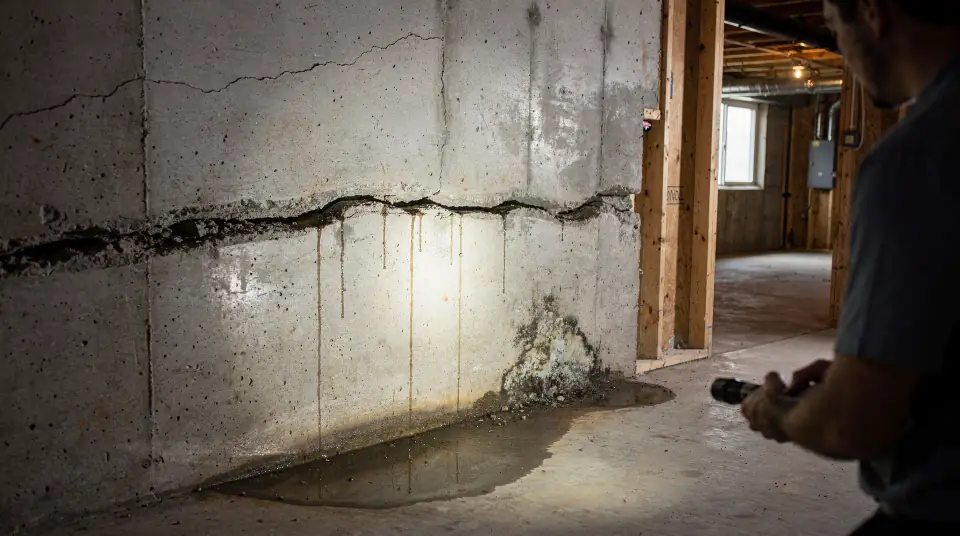
Horizontal cracks indicate the wall is bowing inward under soil pressure. Widening cracks, especially those exceeding a quarter-inch, reveal active movement. Water seepage through any foundation crack confirms the wall’s integrity is compromised. Cracks that grow over time or appear after heavy rainfall warrant immediate professional evaluation. Delaying action allows moisture to erode the concrete further and invites mold growth behind finished walls.
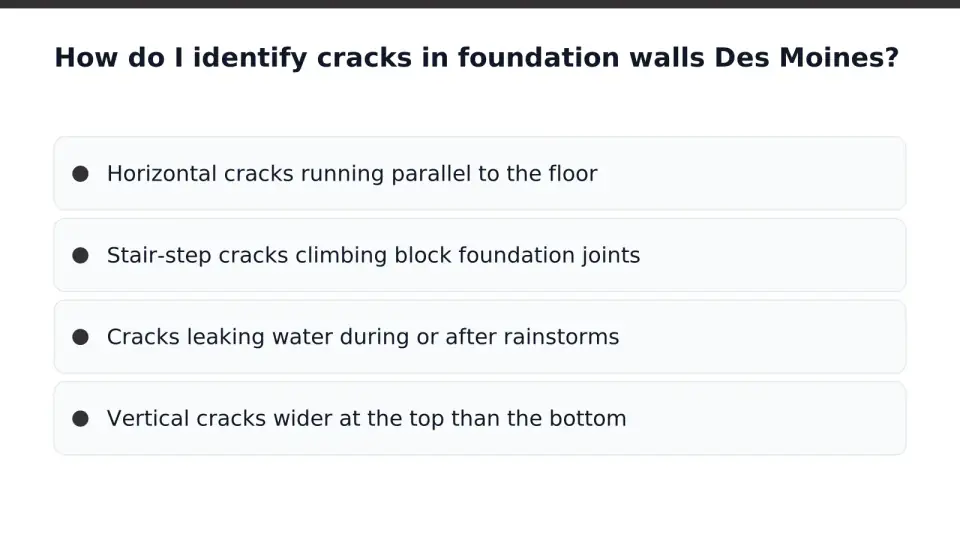
Cracks in foundation walls Des Moines homeowners should never ignore include:
- Horizontal cracks running parallel to the floor
- Stair-step cracks climbing block foundation joints
- Cracks leaking water during or after rainstorms
- Vertical cracks wider at the top than the bottom
A thorough foundation repair assessment examines crack width, location, and moisture activity. The company’s technicians use epoxy and polyurethane injection methods for stable cracks, while structural reinforcement addresses active movement. Homeowners seeking professional crack repair benefit from a written estimate that explains the root cause, not just the visible damage.
What is foundation settlement Iowa homeowners see?
Foundation settlement occurs when soil beneath a Des Moines home compresses or shifts, causing parts of the foundation to sink unevenly. Soil movement, excess water in the soil, and poor construction all contribute to this gradual destabilization over time.
Homeowners across central Iowa encounter settlement in predictable ways. A sagging front porch or stoop signals that the ground below has given way. Steps pulling away from the main structure indicate the foundation has dropped while the surrounding grade stayed put. These visible shifts rarely appear overnight. They develop as clay-heavy Iowa soils expand with moisture and contract during dry spells.
What are the early warning signs of settlement in Des Moines homes?
Gaps between exterior brick veneer and window frames often accompany foundation settlement. Homeowners notice daylight or caulk separation where brick meets trim. This separation means the wall assembly is moving at a different rate than the window opening.
Why does untreated settlement get worse?
Left untreated, minor settlement progresses into major structural problems. Small cracks widen. Doors stick. Floors slope. The entire home’s value and structural health suffer as the foundation continues to shift. Early foundation repair halts this cycle before cosmetic issues become structural failures.
Dry Duck Basement Waterproofing inspects settlement indicators across Des Moines properties and recommends targeted fixes before damage compounds.
Does crawl space encapsulation help prevent damage?
Crawl space encapsulation directly prevents structural damage by controlling moisture beneath a home. A sealed crawl space stops the cycle of soil expansion and contraction that stresses foundations over time.
The process involves installing a heavy-duty vapor barrier across the floor and walls. This barrier blocks ground moisture from rising into the crawl space. It also prevents soil gases from entering the living areas above. Without this protection, excess moisture accelerates wood rot in floor joists. Mold colonies take hold on damp surfaces. The foundation itself begins to deteriorate as water works its way through concrete.
How does moisture in a crawl space affect the foundation?
Expanding and contracting soil ranks among the most common threats to a home’s foundation, according to Olshan Foundation. Excessive moisture saturates the ground around footings. The soil swells and pushes inward. When it dries, the soil shrinks back. This repeated movement creates pressure points that crack concrete and shift support structures. A properly encapsulated crawl space reduces the humidity that drives this destructive cycle.
What does professional crawl space encapsulation include?
Professional installation covers more than laying plastic on the ground. Technicians seal foundation vents to block outside air. They cover the floor and walls with a continuous vapor barrier. Proper drainage systems direct any remaining water away from the structure. The result is a dry, stable environment that protects the home’s structural integrity. Homeowners in Des Moines dealing with clay-rich soils benefit from this comprehensive approach. The company’s crawl space encapsulation services address the specific moisture challenges that lead to foundation settlement Iowa properties experience after wet seasons.
Crawl space encapsulation transforms a vulnerable area into a controlled zone. Wood stays dry. Mold finds no foothold. The foundation remains stable through freeze-thaw cycles and heavy rains.
FAQ
What causes foundation problems in Des Moines?
Expansive clay soils swell when wet and push inward against foundation walls. Deep seasonal frost heaves soil upward, widening existing cracks and creating new ones.
What are the first signs of foundation issues?
Visible cracks in walls or floors, sticking doors, and uneven floors signal foundation problems. These signs indicate the foundation has shifted enough to misalign frames.
Why do Des Moines winters make foundation problems worse?
Freezing temperatures drive the frost line deep into the ground, adding stress on foundation walls. The freeze-thaw cycle heaves soil upward and drops it back down, widening existing cracks.
Conclusion
Catching foundation problems early protects both the structure and the value of a Des Moines home. Cracks, sticking doors, and uneven floors signal movement that worsens with each freeze-thaw cycle and wet season. A professional inspection identifies whether settlement has stabilized or continues to progress. A written estimate explains the root cause behind the visible damage. Homeowners who act on these warning signs stop minor issues from becoming structural failures.